Saturday, April 27, 2013

U.S. suspects Syria used chemical weapons, wants proof

By Phil Stewart and David Alexander

WASHINGTON (Reuters) - The White House said on Thursday the Syrian government of President Bashar al-Assad had probably used chemical weapons on a small scale in the country's civil war, but insisted that President Barack Obama needed definitive proof before he would take action.

The disclosure created a quandary for Obama, who has set the use of chemical weapons as a "red line" that Assad must not cross. It triggered calls from some hawkish Washington lawmakers for a U.S. military response, which the president has resisted.

In a shift from a White House assessment just days earlier, U.S. officials said the intelligence community believed with "varying degrees of confidence" that the chemical nerve agent sarin was used by Assad's forces against rebel fighters. But it noted that "the chain of custody is not clear."

While Obama has declared that the deployment of chemical weapons would be a game-changer and has threatened unspecified consequences if it happened, his administration is moving carefully - saying it is mindful of the lessons of the start of the Iraq war more than a decade ago.

Then, the George W. Bush administration used inaccurate intelligence to justify the invasion of Iraq in pursuit of nuclear, chemical and biological weapons that turned out not to exist.

"Given the stakes involved and what we have learned from our own recent experiences, intelligence assessments alone are not sufficient - only credible and corroborated facts that provide us with some degree of certainty will guide our decision-making," Miguel Rodriguez, White House director of the office of legislative affairs, said in a letter to lawmakers.

One senior U.S. defense official told reporters, "We have seen very bad movies before," where intelligence was perceived to have driven policy decisions that later, in the cold light of day, were proven wrong.

The term "varying degrees of confidence" used to describe the assessment of possible chemical weapons use in Syria usually suggests debate within the U.S. intelligence community about the conclusion, the defense official noted.

The White House said the evaluation that Syria probably used chemical weapons was based in part on "physiological" samples. But a White House official, briefing reporters on condition of anonymity, repeatedly declined to say what that evidence was. Nor is it clear who supplied it.

Chemical weapons experts say sarin, a nerve agent, can be detected in human tissue, blood, urine and hair samples, or in nearby soil or even leaves. But the chemical can dissipate within days or weeks, depending on ambient heat, wind and other factors.

Iraq is said to have used sarin 25 years ago in an attack on the Kurdish city of Halabja during the Iran-Iraq war. More recently, the agent was used in the 1994 attack by a religious cult on riders of the Tokyo subway system.

In Syria, U.S. officials said the scale of the use of sarin appeared limited. Nobody is "seeing any mass casualties" from the possible use of chemical weapons in Syria, one U.S. intelligence official noted.

The United States has resisted being dragged militarily into Syria's conflict and is providing only non-lethal aid to rebels trying to overthrow Assad. Washington is worried that weapons supplied to the rebels could end up in the hands of al Qaeda-linked fighters.

But acknowledgement of the U.S. intelligence assessment appeared to move the United States closer - at least rhetorically - to some sort of action in Syria, military or otherwise.

A White House official told reporters that "all options are on the table in terms of our response" and said the United States, which has been criticized for not doing enough to halt the bloodshed, would consult with its allies.

The official said the U.S. military was preparing for a range of "different contingencies," but declined to give specifics. Options available to Obama could include everything from air strikes to commando raids to setting up a Libya-style "no-fly" zone, either unilaterally or in cooperation with allies.

SURPRISE ANNOUNCEMENT

But Obama appeared intent on deflecting pressure for swift action by stressing the need for a comprehensive U.N. investigation on the ground in Syria - something Assad has blocked from going forward.

Syria's deputy foreign minister, Faisal Mekdad, in an interview with Reuters, dismissed Western and Israeli claims that government forces had used chemical weapons and said it was a "big lie" that Syria was preventing the U.N. probe.

Assad has clung to power despite repeated U.S. calls for him to step down. More than 70,000 people have been killed in the revolt against his family's decades-long autocratic rule. A military stalemate has set in, but Assad has still been able to rely on support from Russia and Iran.

"The reality is that as a country we can't declare red lines and then do nothing when they are crossed. Eventually we have to do something," said Ariel Ratner, a former Middle East adviser in the State Department and now a fellow at the Truman National Security Project.

The Obama administration's sudden disclosure caught many off guard. It came just two days after Defense Secretary Chuck Hagel and other U.S. officials appeared to play down an Israeli assessment that there had been repeated use of chemical weapons in Syria.

France and Britain have also concluded that evidence suggests chemical arms have been used in Syria's conflict.

"The intelligence community has been assessing information for some time on this issue and the decision to reach this conclusion was made within the past 24 hours," Hagel said.

The White House said it wanted to provide a "prompt response" to a query on Wednesday from lawmakers about whether Syria had used chemical weapons. The legislators' letter to Obama cited the assessments by Israel, France and Britain.

Republican Senator John McCain of Arizona, one of the leading advocates of deeper U.S. involvement in the Syrian conflict, said the intelligence assessment demanded a response.

"The president of the United States said that if Bashar Assad used chemical weapons, it would be a game-changer, that it would cross a red line," he said. "I think it's pretty obvious that red line has been crossed."

Democratic Senator Dianne Feinstein, head of the Senate Intelligence Committee, voiced concern that the public acknowledgement of the U.S. intelligence assessment could embolden Assad and may prompt him to calculate "he has nothing more to lose."

"Syria has the ability to kill tens of thousands with its chemical weapons. The world must come together to prevent this by unified action," she said.

In Brussels, the NATO alliance was "concerned by reports of the possible use of chemical weapons," an official said.

"As NATO has said in the past, any use of these weapons would be completely unacceptable and a clear breach of international law, and if any side uses these weapons we would expect a reaction from the international community," the official said.

Patriot missile interceptors that NATO has sent to Turkey, a member of the alliance which borders Syria, would "help ensure the protection of Turkey against any missile attack, whether the missiles carry chemical weapons or not," the official added.

(Additional reporting by Matt Spetalnick, Roberta Rampton, Patricia Zengerle and Tabassum Zakaria; Editing by Warren Strobel and Peter Cooney)

Source: http://news.yahoo.com/u-suspects-syria-used-chemical-weapons-wants-proof-034431157.html

Hollister old navy walmart black friday walmart black friday Target Black Friday PacSun apple store

9 Security Features In New $100 Bill - Business Insider

Come October, when you go to the ATM each morning to take out your daily stack of $100 bills (and really, who doesn't do this?), don't be alarmed if you don't recognize the crazy pieces of paper that come flying out.

Those will be the Fed's new $100 bills ? a project Uncle Sam has been chipping away at since 2003.

The new Benjamins were originally scheduled for circulation starting in February 2011, but the agency was forced to postpone due to problems including "unwanted creases" reports the Los Angeles Times.

Well, it was worth the wait. The new currency is loaded with high-tech features that will make it "easier for the public to authenticate, but more difficult for counterfeiters to replicate," says the Fed. And though the bill costs slightly more to produce than our current $100 note, it should save money in the long run ? $100s are more frequently counterfeited than any other U.S. currency outside the United States. North Korea in particular is known for producing incredibly high-quality counterfeit $100s known as "supernotes," which are almost impossible to detect as fakes. This new bill should make "supernotes" extremely difficult to produce.

And don't worry about turning in the stack of old $100s under your bed. The billions of notes already in circulation will remain legal, but starting October 8, they will be destroyed and replaced when they pass through the Fed. In the interest of preventing confusion at the cash machine, here's a quick look at the new $100:

New security features include:
1. A blue, three-dimensional security ribbon that's woven ? not printed ? into the note's fabric.
2. Another security strip to the left of Ben's face. It's only visible when held up to the light.
3. A faint image of Ben's face in the black space on the right, which can be seen on both sides of the bill.
4. Alternating images of bells and the number 100 that change as the viewing angle is tilted.
5. A liberty bell inside an ink well that changes from copper to green when tilted.
6. A large "100" on the front that also changes color when tilted.
7. An even larger "100" vertically positioned on the back to help those with visual impairments identify the currency.
8. Raised "intaglio" printing throughout the bill to give the note its "distinctive texture."
9. Microprinting reading "The United States of America" on Ben's collar, "USA 100" on the watermark, and "ONE HUNDRED USA" along the golden quill.

Check out NewMoney.Gov for more info.

More from The Fiscal Times:

This story was originally published by ?The Fiscal Times.

Source: http://www.businessinsider.com/9-security-features-in-new-100-bill-2013-4

tony robbins bon iver abraham lincoln vampire hunter their eyes were watching god lara logan manu ginobili sports illustrated swimsuit 2012

First Blackmagic Pocket Cinema Camera footage flaunted (video)

John Brawley flaunts first Blackmagic Pocket Cinema camera video footage video

Noted Blackmagic Design shooter John Brawley has released the first footage from the company's upcoming $995 Pocket Cinema Camera that might leave your DSLR green with envy. Though it's always tough to judge compressed web footage, to our eyes it looks completely untouched by the moire, aliasing and compression artifacts that tends to plague other digital cameras. While not specifying whether he used the compressed RAW setting or not, Brawley said he shot it using a Panasonic 12-35mm f/2.8 Micro Four Thirds lens with image stabilization turned on, meaning that feature's likely to be enabled on the camera when it arrives in late July. He also said he was "literally grabbing shots whilst I was shopping," which bodes well for serious filmmakers with a bit more time to spare. Head past the break to admire the video.

Filed under:

Comments

Via: DVXUser

Source: John Brawley

Source: http://www.engadget.com/2013/04/26/blackmagic-pocket-cinema-camera-footage-video/?utm_medium=feed&utm_source=Feed_Classic&utm_campaign=Engadget

aladdin black forest ufc 144 fight card ufc 144 results acura nsx all star weekend 2012 giada de laurentiis

HBT: Selig reportedly rejected five-year contract

Maybe it means he?s really serious about retiring this time. Maybe he?s holding out for a Pujols-deal. Heyman:

According to two ownership sources, Selig was actually offered a five-year extension when he signed the two-year deal a year ago, and without hesitation he took the two instead. When the term expires, he?ll be 80, and word is he figured that was a nice round number.

Selig wouldn?t comment about the decision to take the much shorter deal. But he was firm on the phone about the next one, the call to retire in 21 months.

I?ve said it before and I?ll say it again. I?ll believe Selig is retired the day a new, permanent commissioner is hired and not a day before.

Source: http://hardballtalk.nbcsports.com/2013/04/26/bud-selig-reportedly-rejected-an-offer-of-a-five-year-contract-extension/related/

zurich classic selena lamichael james lamichael james acl earthquake los angeles unemployment

Analysis: Centuries-old Vienna bourse seeks lifeline in Warsaw

By Georgina Prodhan and Adrian Krajewski

VIENNA/WARSAW (Reuters) - The venerable Vienna Stock Exchange swallowed centuries of national pride this month to enter into talks that could lead to a merger with its upstart rival in Warsaw.

Vienna, the central capital market of the Habsburg Empire in the eighteenth century and later gateway to central and eastern Europe after the fall of the Iron Curtain, has been usurped by the Warsaw exchange , with its friendly regulation and privatisations, as the main arena for investing in the region.

Warsaw passed Vienna in terms of share of trading in central and eastern Europe (CEE) in 2008. The capitalisation of listed companies of 684 billion zlotys ($215 billion) on the main WIG20 market now dwarfs Vienna's 80 billion euros ($104 billion).

But Warsaw itself, part-owned by the government, currently faces a slowing rate of share offerings, while pension reforms could cause an exit of pension-fund assets from the stock exchange - making a merger in its interests too.

A combination could make investors take notice in an era of mega-exchanges like next-door Deutsche Boerse .

As both are secondary bourses dealing mainly in cash share trading rather than more lucrative derivatives trade, a tie-up would also enable them to cut costs and boost their margins.

"Life is becoming very tough for smaller exchanges. It's thin pickings," said Herbie Skeete, managing director of UK-based exchange consultancy Mondo Visione.

Although talks between Warsaw and the Vienna bourse's parent, the CEE Stock Exchange Group (CEESEG), are at an early stage and exploring several different forms of cooperation, analysts say only a full-blown merger would be worthwhile.

The market value of the companies listed on the two exchanges would only total some $268 billion, compared with 783 billion euros ($1.02 trillion) for Frankfurt's DAX <.gdaxi>.

Egle Fredriksson, an eastern Europe-focused portfolio manager at Sweden-based East Capital, said having a single hub for central and eastern Europe might attract more investors not specialised in the region.

The Vienna bourse, which is owned by dozens of Austrian banks, insurers and other companies, has majority or total ownership stakes in the Prague, Budapest and Ljubljana bourses.

"It would be much more interesting to have one bigger market," Fredriksson said. "The people who know less about the region would have fewer moving parts to take account of."

DEARTH OF IPOS

Vienna's structural problems include illiquid shares and negative perceptions of stock trading among investors who got burned by share price falls after the 2008 financial crisis.

Only 5 percent of Austrians own shares, including through funds, and the government may also soon lower the ratio of shares that state-subsidised private pension funds have to hold.

A looming financial transaction tax could also kill off the market makers who create liquidity in small regional exchanges.

Vienna's monthly turnover of 3.25 billion euros, down from 14.7 billion in 2007, is less than that of the London Stock Exchange in a single day. It has not seen a new listing since the 411 million-euro IPO of aluminium group AMAG in April 2011, its first since the financial crisis.

Meanwhile the Warsaw Stock Exchange hosted 17 initial public offerings last year and 33 the year before. Austrian real-estate group Immofinanz , the most liquid stock in Vienna, is planning two listings this year - a secondary listing in Warsaw and an IPO of one of its units in Frankfurt.

Austrian financiers and company bosses have been urging politicians to help reinvigorate the Vienna bourse through more privatisations and measures to encourage share ownership.

Raiffeisen , Erste Bank and Bank Austria , the three major banks in central and eastern Europe, own 31 percent of the CEESEG between them and argue the region needs a stronger regional marketplace.

Raiffeisen's Chief Executive Herbert Stepic warned in February that Austria needed to spruce up its image as a financial marketplace or risk being eclipsed by the cultural heritage sold to Vienna tourists.

"It's just not about the New Year's Concert or Sachertorte or the Lipizzaner," Stepic told a meeting of 21st Austria, an initiative of the country's top firms, central bank and the Vienna Stock Exchange to showcase Austria's opportunities.

"The message that Austria is in fact a vital investor in central and eastern Europe, together with the strength of Austria as a business location, is the message we want to send."

NATIONALISM

However, if it comes to Warsaw's taking over Vienna - in an era of consolidations on the scale of IntercontinentalExchange's $8.2 billion takeover of NYSE Euronext , anything less will barely cause a ripple - the Austrian view may change.

"The idea in itself has charm, but you have to ask yourself whether a merger would really create an institution that brings value for all the participants," said Wilhelm Rasinger, president of the Austrian Shareholder Association.

Warsaw, too, may have other ideas. Pawel Graniewski, an ex-Citigroup investment banker who was appointed to the management board of the Warsaw bourse this month, told Reuters on Tuesday his company did not need to take over Vienna.

"Warsaw is perceived not only as a capital city with a stock market but also as a financial hub for central and eastern Europe," he said in an interview in London. "We are interested in organic growth."

The Vienna Stock Exchange has declined to elaborate on its short statement confirming the talks.

Andreas Treichl, CEO of Erste Group Bank, told German investor TV channel DAF in an interview this month that Austria should get over its national pride and do what made sense.

"We should not have any nationalistic bias in this matter," he said. "I am in favour of creating a large marketplace for central and eastern Europe, and I believe that Warsaw would be a very good place."

(Additional reporting by Philip Baillie, Kylie McLellan and Tommy Wilkes in London, Alexandra Schwarz, Angelika Gruber and Michael Shields in Vienna, and Chris Borowski in Warsaw; Editing by Sophie Walker)

Source: http://news.yahoo.com/analysis-centuries-old-vienna-bourse-seeks-lifeline-warsaw-171306987--finance.html

cause of whitney houston death keanu reeves whitney houston national anthem beverly hills hotel beverly hills hotel the watchmen whitney houston dies

Friday, April 19, 2013

Democratic senator says government healthcare outreach failing

)

By David Morgan

WASHINGTON (Reuters) - A Democratic senator who helped craft President Barack Obama's signature healthcare law gave the administration "a failing grade" on Wednesday for its efforts to educate the public and small employers about sweeping changes due to take effect in eight months.

"I just see a huge train wreck," Senator Max Baucus of Montana told Health and Human Services Secretary Kathleen Sebelius at a hearing of the Senate Finance Committee, an oversight panel that he chairs.

"I'm very concerned that not enough is being done so far. Very concerned," said Baucus, citing examples of perplexed small business owners and polling data showing that most Americans either do not know much about the coming changes or have false information about what to expect.

"The administration's public information campaign on the benefits of the Affordable Care Act, I think, deserve a failing grade. You need to fix it," he said.

Baucus' comments came a week after the release of Obama's $3.77 trillion budget for fiscal 2014, which included a request for extra funding to implement the Patient Protection and Affordable Care Act, often nicknamed Obamacare, one of the biggest pieces of U.S. social legislation since the 1960s.

Sebelius told the committee that the administration takes outreach and education "very, very seriously." She said efforts are under way to address the concerns of small business owners and to organize a public outreach campaign for the summer.

"We also understand that people have a lot of questions and are deploying as many resources as we can to answer those questions and get folks ready," she said.

A main concern is the creation of state online marketplaces where consumers will be able to buy private health insurance at subsidized rates intended to make the coverage affordable for those with family incomes of up to $90,000 a year.

Those exchanges, are due to start enrolling beneficiaries on October 1 and are open to individuals and businesses with fewer than 100 employees. Full operations are scheduled for January 1.

The federal government is required by law to operate exchanges in 33 of 50 states - those that have not set up their own marketplaces.

JUST CONCEPTS

The exchanges are expected to provide health coverage for an estimated 26 million Americans by the end of the decade, with 7 million expected to sign up for 2014, according to the nonpartisan Congressional Budget Office. Another 12 million people are expected to gain coverage through a huge expansion of the Medicaid program for the poor.

But Republican opposition this year scuttled a nearly $1 billion funding request to help pay for an outreach campaign that had been due to start over the summer.

"We were incredibly disappointed that our request for additional outreach and education resources were not made available," Sebelius said.

A fresh $1.5 billion request contained in Obama's latest budget is also not expected to succeed.

Analysts warn that a weak outreach campaign could compromise the success of the exchanges, particularly in Republican-led states where political opposition is greatest. That could leading to higher healthcare costs for consumers and threaten the 2014 congressional midterm re-election prospects of Democrats who voted for the law, which remains unpopular with large numbers of voters.

The Department of Health and Human Services has responded by shifting funds from other areas. But Republicans, who have voted dozens of times to repeal or defund the law, are pressuring the administration over its so-called reprogramming of resources.

Senator Orrin Hatch of Utah, the finance committee's top Republican, suggested that as much as $500 million may have been moved to pay for exchange implementation and called on Sebelius to outline her legal authority to shift funds within the $970 billion HHS budget.

"(We) were not given additional resources by the United States Congress, although we have the duty to implement the law," Sebelius said.

The administration has shifted at least $450 million to health exchange implementation from a $5 billion prevention fund created to support public health and other initiatives.

A Republican-led panel in the House of Representatives on Wednesday approved legislation that would use the fund's remaining resources to provide private health insurance to people with preexisting medical conditions under a program due to expire at year-end.

Meanwhile, Baucus recommended that the public outreach campaign have the ability to measure its own success at improving public understanding of the law.

"You need data," he told Sebelius. "You've never given me any data. You just give me concepts, frankly."

(Editing by Ros Krasny, Mohammad Zargham and Cynthia Osterman)

Source: http://news.yahoo.com/democratic-senator-says-government-failed-healthcare-outreach-181450440.html

national grid LIPA Garcinia Cambogia Little Things One Direction Bob Ross Hurricane Categories Hurricane Sandy

Wednesday, April 10, 2013

Senators strike deal on background checks

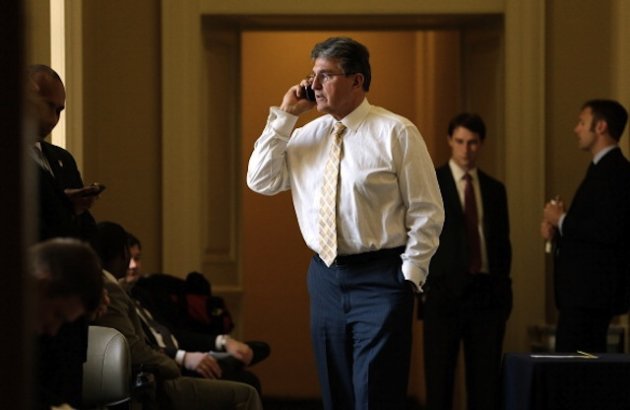
Sen. Joe Manchin, D-WV, outside the weekly Democratic policy luncheon April 9, 2013, in Washington, D.C. (Win McNamee/Getty??

Sens. Joe Manchin, D-W.V., and Pat Toomey, R-Pa., unveiled a deal in a press conference on Wednesday morning to expand background checks to nearly every commercial gun purchase. Obama said there were parts of the agreement "that might prefer to be stronger" but welcomed the move and pushed Congress to "finish the job" of writing legislation to tamp down gun-related violence.

Manchin called the agreement a "first step" to passing broader legislation.

"The events of Newtown changed us all," Manchin said, referring to the Dec. 14 shootings that killed 20 children and six adults at a Connecticut elementary school. "Nobody here ? with a good conscience could sit by and not try to prevent a day like that from happening again."

Currently, only people who buy guns through federally licensed dealers have to undergo a criminal background check, leaving a loophole for some online and gun show shoppers. The new bill would expand checks to nearly every gun transaction except for some private sales and transfers among relatives. The background checks bar people who have committed felonies or have been declared mentally ill by a judge from purchasing firearms.

Toomey said he did not think expanding background checks to cover current loopholes amounts to "gun control." Instead, he said, "It's just common sense."

Both Toomey and Manchin are gun owners and have an A rating from the National Rifle Association, the largest pro-gun lobby group. Toomey said he added some provisions to strengthen gun rights in the bill, including allowing a legal gun owner to take his or her concealed weapon over state lines while traveling, even if that state does not allow concealed carry.

The full bill also provides more money for school safety and strengthens laws against illegal firearm sales. Proposals to ban certain semi-automatic weapons and limit magazine sizes?pushed by President Barack Obama and other Democrats?have been dropped from the main bill, but could be added later in an amendment process.

Republican Sens. Ted Cruz of Texas, Rand Paul of Kentucky and Mike Lee of Utah have threatened to fillibuster the legislation, which could face a test vote as early as Thursday.

Hours after the announcement, Obama issued a statement praising the Manchin-Toomey accord.

"I applaud Senators Joe Manchin and Pat Toomey for their leadership on forging a bipartisan agreement around commonsense background checks that will make it harder for dangerous people to get their hands on a gun," he said.

"???This is not my bill, and there are aspects of the agreement that I might prefer to be stronger.? But the agreement does represent welcome and significant bipartisan progress," the president said.

"?Of course, a lot of work remains. ?Congress needs to finish the job.? The Senate must overcome obstruction by defeating a threatened filibuster, and allow a vote on this and other commonsense reforms to protect our kids and our communities.? Any bill still has to clear the House.? So I?m going to keep asking the American people to stand up and raise their voices, because these measures deserve a vote ? and so do the families and communities they?re designed to protect."

Olivier Knox contributed to this report

Source: http://news.yahoo.com/blogs/ticket/senators-announce-deal-gun-background-check-bill-145147692--election.html

albatross louis oosthuizen phil mickelson 10 year old gives birth c. difficile carmelo anthony nurse jackie

Thursday, April 4, 2013

Thandie Newton takes lead acting role in 'Rogue'

In this Thursday, March 28, 2013 photo, actress Thandie Newton poses for a photograph, in Atlanta. Newton stars as a conflicted undercover cop in a new television crime series, "Rouge," airing April 3, 2013. (AP Photo/Mike Stewart)

In this Thursday, March 28, 2013 photo, actress Thandie Newton poses for a photograph, in Atlanta. Newton stars as a conflicted undercover cop in a new television crime series, "Rouge," airing April 3, 2013. (AP Photo/Mike Stewart)

In this Thursday, March 28, 2013 photo, actress Thandie Newton poses for a photograph, in Atlanta. Newton stars as a conflicted undercover cop in a new television crime series, "Rouge," airing April 3, 2013. (AP Photo/Mike Stewart)

In this Thursday, March 28, 2013 photo, actress Thandie Newton poses for a photograph, in Atlanta. Newton stars as a conflicted undercover cop in a new television crime series, "Rouge," airing April 3, 2013. (AP Photo/Mike Stewart)

(AP) ? Thandie Newton doesn't shy away from the idea that she might be a role model.

As she takes on a leading television role, she hopes to empower women like the stars who have come before her ? Kerry Washington, Regina King and Anika Noni Rose among them.

"They have empowered many," said Newton, a racially mixed actress who is of British and Zimbabwean decent. "Empowerment anywhere leads to empowerment everywhere. The world is changing at a pace where it needs to be. That's how I feel, and I'm proud to be a part of this movement."

The 40-year-old actress will star in the dramatic series, "Rogue," which premieres Wednesday night on DirecTV's in-house channel Audience Network. It'll be DirecTV's first venture into original programming, and the third series to air on Audience along with "Friday Night Lights" and "Damages."

On the 10-episode "Rogue," Newton plays Grace Travis, an undercover detective who takes on a gangster after her son is killed in a drive by shooting.

"It's the most time I've had to explore a character. It was a luxury," she said. "I had a chance to explore the settled details of what this person is going through. That's why TV is so great. You get to see deeper than you would if it was an hour and a half, although it felt like we were making a 10-hour movie."

Newton, who has starred in movies such as "Crash" and "The Pursuit of Happiness," said the show's creator Matthew Parkhill told her before taping "Rogue" to prepare herself mentally and physically for the filming process.

"He said 'Crash' was only six days for you. This show will be 'Crash' for four months," recalled Newton. "I'm very instinctive when it comes to the emotional stuff, but I knew I needed stamina."

Newton wanted to get more into character, learning the techniques of Krav Maga ? an Israeli tactical self-defense method used in close combat. She thought it would be better for her to show that she can actually fight, rather than tote around a gun.

"I wanted to train in the gritty street-like way," she said. I was playing an undercover detective, so I wanted to look like I was well trained. I didn't want to be the character looking sexy with a gun."

Newton said she was glad to show that she's more than a pretty face.

"For me, it has been a gradual evolution of empowerment of women of color," she said. "I'm a success already. I'm happy to influence others along the way. ... This is one life. If we're able to help others while on this journey, then fantastic."

___

Online:

http://www.thandie.net/

https://www.directv.com/tv/Rogue-SDYxMHhEbDZra289

___

Follow Jonathan Landrum Jr. on Twitter at http://twitter.com/MrLandrum31

Associated Press

Source: http://hosted2.ap.org/APDEFAULT/4e67281c3f754d0696fbfdee0f3f1469/Article_2013-04-02-US-TV-Thandie-Newton/id-81e92b5f3e814f1e8726514e5033786a

asante samuel salton sea arizona immigration law aubrey huff the killers julianne hough brandy